There is a biopic is in the works about the life of Linda Lovelace. Amanda Seyfried, who is to play Linda, is said by the article to "dirty up" her image as an actor. Though said more in context to the biopic than as an insult to Amanda it still says something about how acting as a porn star while not even participating in any actual sex is considered dirty. The story of Linda Lovelace is interesting as it can show the horrible things people can do in the sex industry.
Linda Susan Boreman, otherwise known as Linda Lovelace, was a pornographic porn actor in the 70s who starred in a very successful film called "Deep Throat." What makes her story one of note is that she claimed that she was forced at gunpoint to work in pornography and even prostitution by her husband at the time. She claimed she was drugged, raped, and beaten and was even forced into a bestiality film. While the porn film Deep Throat was said to have earned over 600 million dollars (of which a mafia family profited off of), she claimed that she did not make any money off of it. She claimed that she was forced into the film and that it was basically footage of her getting raped. After Linda left the porn industry she became involved in an anti-pornography feminist movement.
I think the story can make you wonder how many other women are forced into porn but don't manage to get free of it or have their stories told. The term, "Linda Syndrome" was coined to refer to women who were once in porn but have come to decry the industry. I also wonder, perhaps pessimistically, if some men watching porn would abject if the idea that the actors in the porn they watch may have a gun to their heads, or if some men would like it even more.
Tuesday, November 1, 2011

Thursday, October 20, 2011
Tim Allen's new show. Why now?
A lot of shows nowadays try to show changes in masculinity and femininity or try to bring to light some things that used to be controversial. Shows like Queer Eye for the Straight guy attempted to skew what we think of as acceptably feminine for heterosexual males. Sex in the City helped show a different view on women's sexuality. Homosexuality is a more prominent theme in many shows. With all these shows portraying a change in how people view what's acceptable or normal, why bring back Tim Allen's stereotype of masculinity now?
Tim Allen's previous show, Home Improvement, was about a man with a wife and four sons who tries to be masculine and use power tools and be a "real man." Being a comedy show, Tim acted like the idiot husband that was common in sitcoms at the time. For a decade it was a very popular show with high ratings and quite a few award nominations.
This new show, Last Man Standing, is much the same as Home Improvement but with 3 daughters instead of sons. Instead trying to be a handy man, Tim's character is a man who has to switch from working on a catalog for the outdoor sports company he works at, to their website. In the show, Tim complains about things like blogging not being manly and clashing with his wife and daughters because he wants to be masculine. His wife is the type of smart wife character that is often put together with a more foolish husband to make his masculinity seem threatened.
Most reviews about the show by critics were scathing. Remarks that the show was crude, behind the times, and this review even said that the gender jokes were "mildly offensive."
Other unfavorable reviews include:
http://news.yahoo.com/tim-allens-last-man-standing-one-liners-no-234145540.html
http://www.metacritic.com/tv/last-man-standing-2011/season-1
http://articles.nydailynews.com/2011-10-11/entertainment/30284548_1_new-abc-sitcom-joke-allens
Despite these reviews, the debut drew in 13 million viewers. Whether this was due to Tim Allen's previous success drawing in viewers, people liked the theme of the show, or other reasons, it is still an impressive debut. The test will be whether or not the show keeps such high views.
It may be interesting to find out if this show takes off or not as it is contrary to the changes in how gender roles are being portrayed in other shows today. Will it be successful and show that many want to stick to the view of real men being gruff and sweaty working men that avoid all things considered feminine? Will it tank because people want to leave that view behind? Or maybe it will fail just because of bad screenwriting? Too early to say.
Tim Allen's previous show, Home Improvement, was about a man with a wife and four sons who tries to be masculine and use power tools and be a "real man." Being a comedy show, Tim acted like the idiot husband that was common in sitcoms at the time. For a decade it was a very popular show with high ratings and quite a few award nominations.
This new show, Last Man Standing, is much the same as Home Improvement but with 3 daughters instead of sons. Instead trying to be a handy man, Tim's character is a man who has to switch from working on a catalog for the outdoor sports company he works at, to their website. In the show, Tim complains about things like blogging not being manly and clashing with his wife and daughters because he wants to be masculine. His wife is the type of smart wife character that is often put together with a more foolish husband to make his masculinity seem threatened.
Most reviews about the show by critics were scathing. Remarks that the show was crude, behind the times, and this review even said that the gender jokes were "mildly offensive."
Other unfavorable reviews include:
http://news.yahoo.com/tim-allens-last-man-standing-one-liners-no-234145540.html
http://www.metacritic.com/tv/last-man-standing-2011/season-1
http://articles.nydailynews.com/2011-10-11/entertainment/30284548_1_new-abc-sitcom-joke-allens
Despite these reviews, the debut drew in 13 million viewers. Whether this was due to Tim Allen's previous success drawing in viewers, people liked the theme of the show, or other reasons, it is still an impressive debut. The test will be whether or not the show keeps such high views.
It may be interesting to find out if this show takes off or not as it is contrary to the changes in how gender roles are being portrayed in other shows today. Will it be successful and show that many want to stick to the view of real men being gruff and sweaty working men that avoid all things considered feminine? Will it tank because people want to leave that view behind? Or maybe it will fail just because of bad screenwriting? Too early to say.
Thursday, October 6, 2011
Being Plastic

Look fake? Well she mostly is, and yes, that is a real live woman.
http://izismile.com/2011/09/06/real_life_barbie_doll_from_moscow_23_pics.html
Surgery is dangerous. It would not be strange to think that using such a method for vain purposes is wrong or foolish. While this is a matter of personal opinion, the truth is that a lot of people attribute cosmetic surgery as making someone "fake." This girl actually aspires to a fake doll. I believe she even went as far as to get contacts to make her eyes seem almost dead.
This isn't the only instance of someone wanting to be like a barbie doll.

Sarah Burge as seen above also payed quite a bit in order to look like a barbie doll.
I find it interesting that some desire the beauty of a doll that doesn't even match up to normal human proportions.

Thursday, September 29, 2011
Team Fortress 2 Character Breakdowns
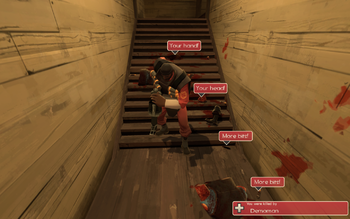
Team Fortress 2 (commonly referred to as just TF2) is a multiplayer, team-based, first person shooter than can be played on Xbox, PC, or PS2. While not experienced in the console versions myself, the PC version's multiplayer games normally consist of 20 to 32 people. Just in a few seconds of querying servers to play on, over 600 popped up. Not all the servers are filled to capacity, but it is obvious that quite a few people play it daily. The playable characters constantly taunt each other, and while the art style is cartoon-like, deaths are extremely exaggerated.
TF2's 9 playable characters each have their own personalities and are created from stereotypes for a comedic element. Even though it is intended for comedy, the fact that the characters' ethnicity are easily recognized from there stereotypical personality says something about how strong the stereotypes are. The soldier sounds a lot like the common view of an American army drill sergeant. The scout is a skinny, white, smart-mouthed New Yorker equipped with a baseball bat and cap. The demoman is described as a "black Scottish cyclops" and is foul-mouthed and drunken. The pyro is unintelligible and hidden inside a full-body flameproof suit. The Heavy is a soviet style Russian who is very large and taunts others calling them babies. Engineer is noticeably from Texas, complete with the accent and phrases like "Giddy Up" and "Yippekayahee." The medic is German and is somewhat militaristic and disciplined. The Spy is french, and is suave and polite, kinda like the personality of James Bond. The final class is the Sniper in which I will go into more detail about.
The Sniper is clearly Australian, has the accent, a Crocodile Dundee getup, and says phrases such as "Go on then, mates" and "crikey." Some of his taunts include calling people women or wusses. The sniper takes pride in his job as an assassin. In his introductory video (of which every class but pyro has), "Meet the Sniper," he attempts to justify his profession. He states that as long as two people are left, one of them will want that other dead. You get the idea that he thinks violence and killing are normal. To him, sniping is a good job because it is challenging and is done out-doors, which makes it seem very manly. My favorite line in the video is when he is talking to his father and his father calls him a crazed gunman. The sniper says that he is different from a crazed gunman because his killing is a profession and the other is a mental illness. If the sniper kills for personal gain, then what is the difference between a murder killing for personal enjoyment or other such reasons. While it is supposed to be fun, the line shows that sometimes a distinction is made in why killing is done in an attempt to justify it.
Team Fortress is funny, but its comedic value can desensitize players to the violence and stereotypes it show. After all, the characters' personalities are pulled from some real world views. I also find it more personal than some other shooting games. The characters are likable, funny, and you really get familiar with them while playing, ignoring that they are all killers.
The other "Meet the Team" videos.
TF2's 9 playable characters each have their own personalities and are created from stereotypes for a comedic element. Even though it is intended for comedy, the fact that the characters' ethnicity are easily recognized from there stereotypical personality says something about how strong the stereotypes are. The soldier sounds a lot like the common view of an American army drill sergeant. The scout is a skinny, white, smart-mouthed New Yorker equipped with a baseball bat and cap. The demoman is described as a "black Scottish cyclops" and is foul-mouthed and drunken. The pyro is unintelligible and hidden inside a full-body flameproof suit. The Heavy is a soviet style Russian who is very large and taunts others calling them babies. Engineer is noticeably from Texas, complete with the accent and phrases like "Giddy Up" and "Yippekayahee." The medic is German and is somewhat militaristic and disciplined. The Spy is french, and is suave and polite, kinda like the personality of James Bond. The final class is the Sniper in which I will go into more detail about.
The Sniper is clearly Australian, has the accent, a Crocodile Dundee getup, and says phrases such as "Go on then, mates" and "crikey." Some of his taunts include calling people women or wusses. The sniper takes pride in his job as an assassin. In his introductory video (of which every class but pyro has), "Meet the Sniper," he attempts to justify his profession. He states that as long as two people are left, one of them will want that other dead. You get the idea that he thinks violence and killing are normal. To him, sniping is a good job because it is challenging and is done out-doors, which makes it seem very manly. My favorite line in the video is when he is talking to his father and his father calls him a crazed gunman. The sniper says that he is different from a crazed gunman because his killing is a profession and the other is a mental illness. If the sniper kills for personal gain, then what is the difference between a murder killing for personal enjoyment or other such reasons. While it is supposed to be fun, the line shows that sometimes a distinction is made in why killing is done in an attempt to justify it.
Team Fortress is funny, but its comedic value can desensitize players to the violence and stereotypes it show. After all, the characters' personalities are pulled from some real world views. I also find it more personal than some other shooting games. The characters are likable, funny, and you really get familiar with them while playing, ignoring that they are all killers.
A very gory death scene.
The other "Meet the Team" videos.
Thursday, September 22, 2011
"Badass" of the Week
Badass of the Week is a site dedicated to telling some short stories or summaries of the lives of would could be considered very masculine people. A good portion of the chosen "badasses" are male warriors or soldiers. While there are some stories of women, athletes and fictional characters, even they tend to be about violence.
The writing style of the author is very harsh. The author uses a large amount of profanity to give the vibe of being tougher and grittier. He also uses a plethora of terms associated with masculinity like "balls of steel." While not having the time to read all of the stories, the ones I did read seemed to be about the portrayal of masculinity as something involving things like violence and independence. The strongest feelings coming from the stories are things like pride and anger.
While a good bit of the "badasses" are what many would consider heros, posts like Megalodon, a giant shark, and the fictional weapon, "The BFG 9000," show that there is quite a fascination with power and killing. The site servers as a good example of what can be considered as very masculine.


The writing style of the author is very harsh. The author uses a large amount of profanity to give the vibe of being tougher and grittier. He also uses a plethora of terms associated with masculinity like "balls of steel." While not having the time to read all of the stories, the ones I did read seemed to be about the portrayal of masculinity as something involving things like violence and independence. The strongest feelings coming from the stories are things like pride and anger.
While a good bit of the "badasses" are what many would consider heros, posts like Megalodon, a giant shark, and the fictional weapon, "The BFG 9000," show that there is quite a fascination with power and killing. The site servers as a good example of what can be considered as very masculine.
A couple of soldiers shown. There are quite a few soldier stories on the site.
Maurice Richard the hockey player shown bruised after a fight.
Thursday, September 8, 2011
Henpecked Husband
While thinking about the types of men portrayed in media that we learned in class like the lazy and dumb working-class man compared to the successful and suave middle or high-class man that tend to be the more common in media, I got to thinking about a different portrayal. This type of man is a married man who is bossed around by his wife, sometimes called the "henpecked husband." This type of character is often part of comedies and is looked down on. In contrast, women being bossed around by their husband in the same way is viewed more negatively and seriously. One noticeable example is that in the show Roseanne, Roseanne will sometimes boss her husband around once stating, "I don't push Dan around. I am trying to put him in touch with his submissive side." I find it a bit ironic as the show is supposed to support feminism but shows her doing what would most likely be found unacceptable in the reverse.
Subscribe to:
Posts (Atom)